
 Sally
Sally Playtime is more than just fun and games—it’s a crucial part of a child’s social and emotional development. For toddlers and young children, play provides an opportunity to learn how to interact with others, navigate social rules, and build important relationships. But how can parents and caregivers help guide this process? One of the most effective ways is by using toys that encourage socialisation, teamwork, and communication. In this article, we’ll explore how specific toys, such as a playhouse climbing frame, and wooden climbing frame with swing, can play an essential role in helping your child develop friendships.

The Importance of Social Play
Before diving into the specifics of toys, it’s important to understand why social play is so vital in early childhood. From the moment children are born, they start learning how to interact with the world around them. As they grow, the need for social interaction becomes more pronounced. Toddlers begin to experiment with language, express emotions, and understand the concept of sharing.
For children to develop healthy social skills, it’s important that they have the opportunity to interact with peers in a relaxed environment, where they can practice empathy, conflict resolution, and communication. Play, whether structured or unstructured, is the perfect way to cultivate these abilities. By incorporating toys that encourage group activity, your child can learn how to work as part of a team, share ideas, and engage in cooperative play, all of which are the foundations for building friendships.
The Role of Toys in Socialisation
Toys can significantly impact a child’s social growth, especially when they are designed to promote shared experiences. For example, toys that are meant to be used with others—like the toddler swing, playhouse climbing frame, and wooden climbing frame with swing—help children interact, cooperate, and negotiate with each other in a way that single-player toys do not. These types of toys encourage physical activity, imaginative play, and even teamwork, all while keeping children engaged and excited to interact with their peers.
1. Toddler Swing: Encouraging Turn-Taking and Communication
A toddler swing may seem like a simple piece of outdoor equipment, but it offers numerous opportunities for social development. When children take turns on the swing, they practice key social skills such as patience, sharing, and turn-taking. These are essential skills in any friendship, and swinging with others also opens up opportunities for children to start conversations. They can talk about their turns, help each other with pushing, or simply enjoy swinging side by side.
The physical nature of a toddler swing also encourages children to communicate non-verbally. Through body language and shared experiences, they begin to understand the concept of “waiting” and “helping,” which further strengthens their social bonds. For example, if one child is too shy to ask for help, the other might instinctively offer a push, showing empathy and kindness. These small interactions help to lay the groundwork for more complex social relationships as children grow older.
Moreover, outdoor play with a toddler swing provides a natural setting for children to bond with their siblings or friends. Swinging together fosters a sense of joy and freedom, which can make the experience even more fun and memorable. It also allows children to build trust with others as they play together regularly, thus promoting healthy emotional connections.
2. Playhouse Climbing Frame: Fostering Imagination and Teamwork
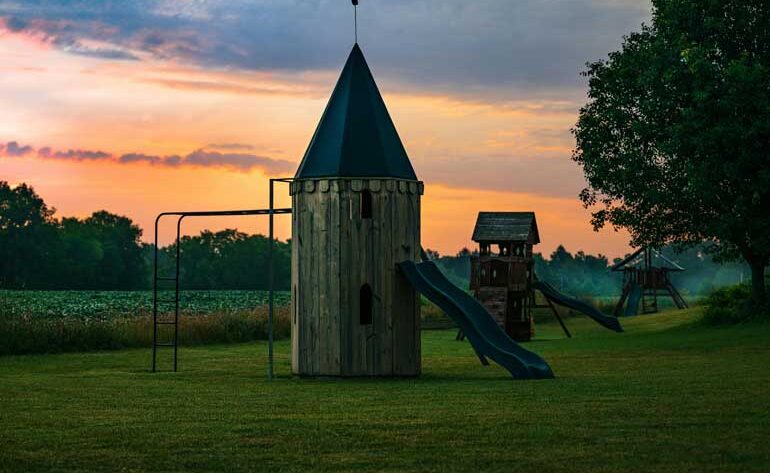
A playhouse climbing frame is more than just a fun way to burn off energy. This multi-functional toy encourages socialisation by allowing children to work together in various ways. Whether they are climbing, sliding, or playing pretend games in the playhouse, the climbing frame offers numerous opportunities for children to interact, collaborate, and communicate.
The playhouse climbing frame can encourage children to use their imagination in group play, such as pretending the playhouse is a secret base or a shop. These imaginative scenarios help children explore different roles, understand the perspectives of others, and negotiate rules and boundaries in their play. By taking on different roles—such as shopkeeper, customer, or explorer—children can learn to compromise, communicate effectively, and solve problems together.
This type of play also promotes teamwork, as children may need to work together to reach the top of the climbing frame or share space in the playhouse. As children navigate these challenges, they learn to manage conflicts, celebrate successes, and respect each other’s ideas. These are all important skills for forming lasting friendships, as they help children develop empathy, respect, and trust in others.
Additionally, a playhouse climbing frame provides a physical space where children can interact in a more intimate setting. While larger group activities might feel intimidating to some children, the confined space of a playhouse creates a more manageable and comfortable environment for children to forge connections with their peers. As they play together in close quarters, children learn to share, take turns, and respect personal boundaries—all key elements of healthy relationships.
3. Wooden Climbing Frame with Swing: Promoting Active Play and Group Interaction
A wooden climbing frame with a swing offers the perfect blend of physical activity and cooperative play. This type of toy combines climbing, swinging, and sliding, which allows children to explore their physical capabilities while also engaging with others. The wooden climbing frame is often large enough to accommodate multiple children at once, encouraging them to take turns, share space, and collaborate on how to use the various features of the play structure.
One of the best things about a wooden climbing frame with swing is that it can support a wide range of activities. Children can play together as they race to the top, take turns swinging, or team up to invent new games. The climbing aspect of the frame allows children to challenge each other and celebrate each other’s achievements, fostering a spirit of cooperation and mutual respect.
Additionally, swinging together on a wooden climbing frame provides another great opportunity for social interaction. As children take turns on the swing, they can chat, laugh, and build friendships. The shared experience of swinging can create moments of bonding, as children exchange ideas, offer encouragement, and enjoy each other’s company in a supportive, relaxed atmosphere.
The wooden structure of the frame also adds an element of stability and safety, making it an ideal option for parents who want their children to play together without fear of injury. This can encourage children to interact more confidently and comfortably, knowing that they are in a secure environment. As they gain confidence, they may be more likely to approach new peers and engage in group play.

Conclusion
Toys such as the toddler swing, playhouse climbing frame, and wooden climbing frame with swing provide more than just entertainment—they are powerful tools for fostering socialisation, teamwork, and friendship. By incorporating these types of toys into your child’s playtime, you give them the opportunity to learn important social skills such as sharing, turn-taking, and communication.
Moreover, these toys provide a space for children to experiment with different roles, solve problems together, and build trust in their peers. The result is that your child not only has fun, but they also develop meaningful relationships and emotional intelligence that will serve them throughout their lives.
So, when selecting toys for your child, consider the value of those that encourage social interaction and teamwork. After all, the playtime experiences that help children develop friendships are some of the most important they will have in their early years.
